

college admissionsTest Prep
PSAT Scores Are Rolling In: Now What?
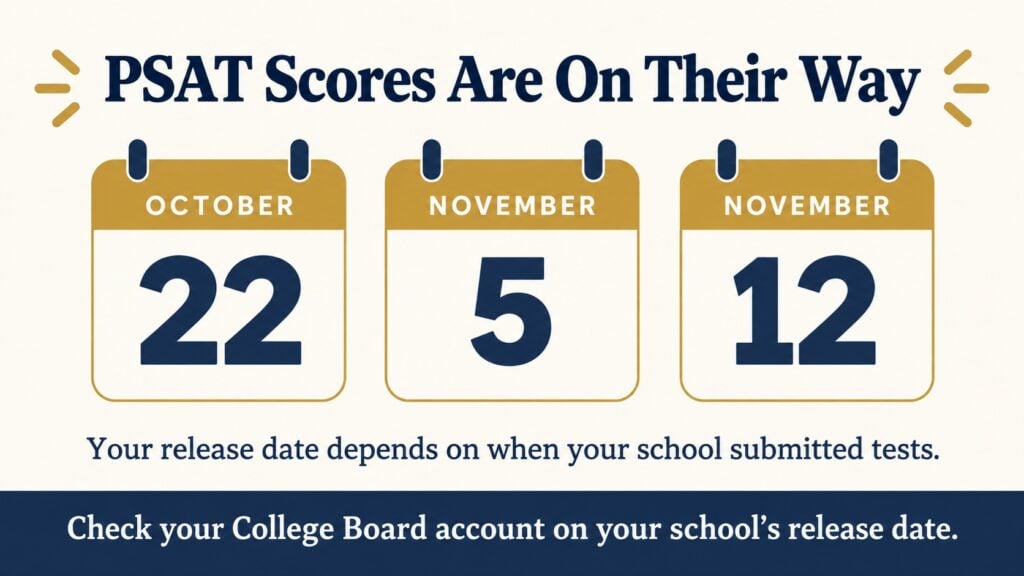
PSAT/NMSQT testing wraps up across the country on October 30, and scores are already on the way. College Board releases scores in three waves based on when your school submitted tests: October 22, November 5, and November 12. Check your College Board account on your school’s release date.
Whether you’re a sophomore seeing the PSAT for the first time or a junior chasing National Merit, here’s how to turn that score report into a game plan. And this year, there’s a bigger reason to pay attention: more and more colleges are bringing test requirements back.
The Test-Optional Era Is Ending
When colleges went test-optional during the pandemic, a lot of families decided the SAT and ACT didn’t matter anymore. That window is closing fast.
Since MIT led the way in 2022, a growing list of highly selective and flagship schools have reinstated their requirements. Schools that now require SAT or ACT scores include:
- UT Austin (required since Fall 2025, and it does not superscore)
- Harvard, Brown, Cornell, Dartmouth, Stanford, MIT, Caltech, and Johns Hopkins
- Georgia Tech, University of Georgia, University of Florida, and Ohio State
- Auburn, plus phased returns at LSU and Alabama
- Princeton and Claremont McKenna, starting with the 2027-28 application cycle
And closer to home, keep an eye on Texas A&M. A&M is test-optional for students applying this fall, but we’re hearing from reliable sources that a return to required test scores could be announced once this application cycle wraps up. If that happens, it would hit today’s juniors first.
Here’s the bottom line: even at schools that are still test-optional, optional doesn’t mean ignored. About 77% of A&M’s most recent freshman class submitted SAT scores. A strong score is still one of the clearest ways to stand out, and it’s often tied to merit scholarships.
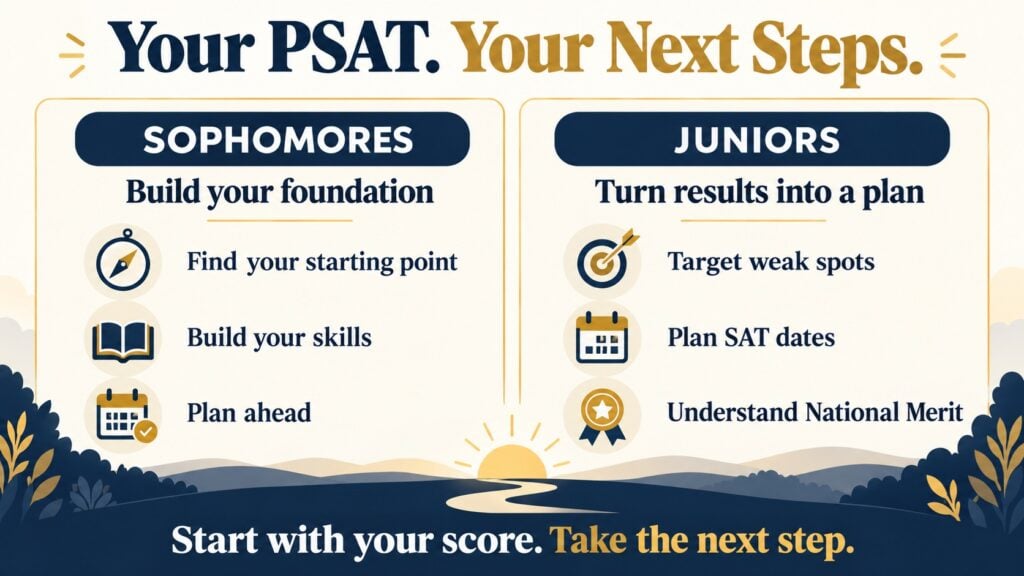
For Sophomores: Use the PSAT as a Diagnostic Tool
If you’re a sophomore (Class of 2029), your PSAT is not a verdict on your college readiness. It’s a snapshot of where you are right now, and most of the test covers material you likely haven’t learned yet.
- Geometry is common in 10th grade, but only 5 to 7 PSAT questions test it.
- About two-thirds of the math is Algebra II or higher, content most sophomores haven’t fully covered.
Use your score to spot strengths and weaknesses. If you scored 1300 or higher, consider prepping for next year’s PSAT to make a run at National Merit recognition. Just know that National Merit scholarships are increasingly rare, and only a few colleges still offer full-tuition awards for Finalists.
The bigger takeaway for sophomores: with more schools requiring scores by the time you apply, now is the perfect time to start building a testing plan, not scrambling for one senior year.
For Juniors: Two Big Reasons the PSAT Matters
For juniors (Class of 2028), this PSAT carries real weight. It’s both a diagnostic tool and the qualifying test for the 2028 National Merit Scholarship Program.
1. Use It to Prep for the Real SAT
Many juniors will take the SAT this spring. Your PSAT score report shows exactly what still needs work, including the questions you missed, the correct answers, and explanations. That’s invaluable feedback you don’t get from the official SAT.
If Texas A&M and other schools return to requiring scores, you’ll be the first class affected. Starting prep now gives you time for multiple attempts and a superscore at the schools that offer one.
2. Understand National Merit Qualification
The junior-year PSAT is the only way to qualify for National Merit. Here’s the quick breakdown:
- National Merit uses a Selection Index (NMSI), not your total score.
- Formula: (Reading and Writing x 2) + Math, then divide by 10.
- In Texas, the Class of 2027 needed a 219 to qualify as a Semifinalist, down from 222 the year before.
Example: A 720 in Reading and Writing plus a 750 in Math gets you to exactly 219.
Semifinalists are notified through their high schools the following September, so you won’t know for sure until Fall of senior year.
What to Do Next
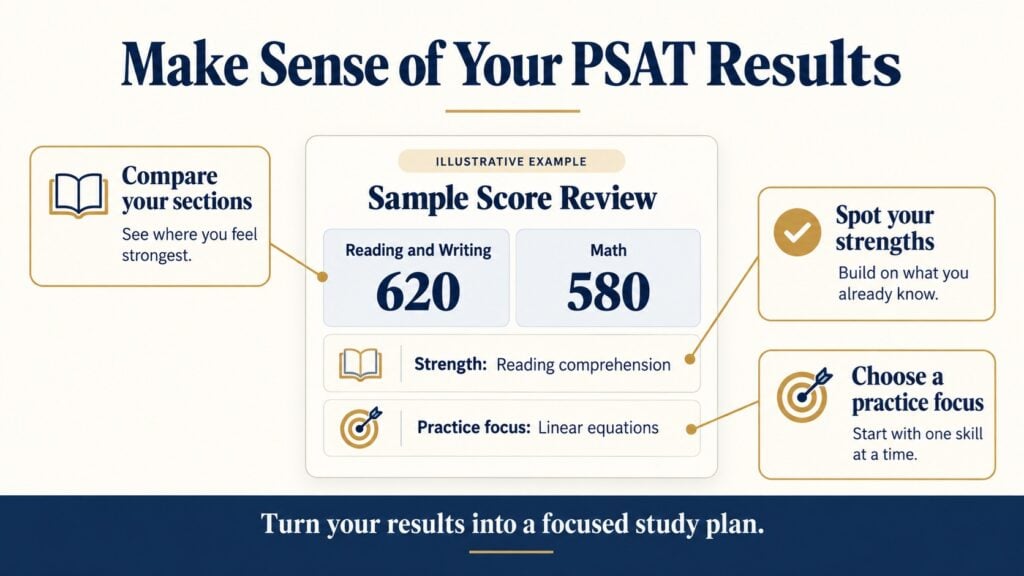
Here’s how to turn your PSAT results into action:
✅ Review Your Score Report Focus on the question-level breakdown. Which concepts tripped you up? Was it content or timing?
✅ Check Your College List’s Testing Policies Don’t assume a school is still test-optional. Policies are changing every year, so verify each one, and look at the average SAT scores for admitted students. Are you close? If not, it’s time to start prepping.
✅ Plan Your Next Official Test Map out your SAT timeline now. Spring of junior year is the sweet spot, leaving summer and fall of senior year for retakes. Our March SAT Boot Camp is our most popular session and fills up fast.
✅ National Merit Hopeful? Start Strategizing If you’re near or above a 1300 as a sophomore, decide now if you want to gear up for a Semifinalist run next October.
Take the First Step
Testing policies are shifting under families’ feet, and the students who plan early have the advantage. You don’t have to figure it out alone.
Schedule a free 30-45 minute introductory consultation and we’ll review your student’s PSAT results together and build a personalized testing roadmap.
Book your consultation today: Click here