Uncategorized
College fair season is here — most DFW districts run their own version of this event every fall. If your student is standing in front of a table asking a rep whether the school is “really” test-optional or what their actual acceptance rate is, they’re using the fair the wrong way. That information is already sitting on the school’s website. What a fair actually offers is something no website can: a real person, standing in front of you, for as long as you want to talk.
What the College Gets Out of It
It helps to remember why colleges show up to these things at all. A college fair isn’t a public service. It’s recruiting. For some schools, more applicants means a lower acceptance rate, a more selective-looking class, and a better ranking. But for many more schools, it’s simpler than that: fairs are part of the marketing cycle. They need a steady pipeline of applicants to fill seats and keep the lights on, even as a non-profit. Either way, the person at the table has a job: encourage applications, and make your student feel like this is the school for them. That’s not dishonest, exactly. It’s just what recruiting looks like. A good rep will genuinely try to find the angle that fits your student. But their default posture is “yes,” regardless of whether the school is actually a good fit.
Knowing that changes how you should listen. A rep telling your student “you’d be a great fit here” isn’t an admissions decision. It’s a sales pitch, and a well-meaning one. Take the enthusiasm in stride, and don’t mistake it for information you didn’t already have.
What a Fair Is Actually Good For: Discovery, Not Verification
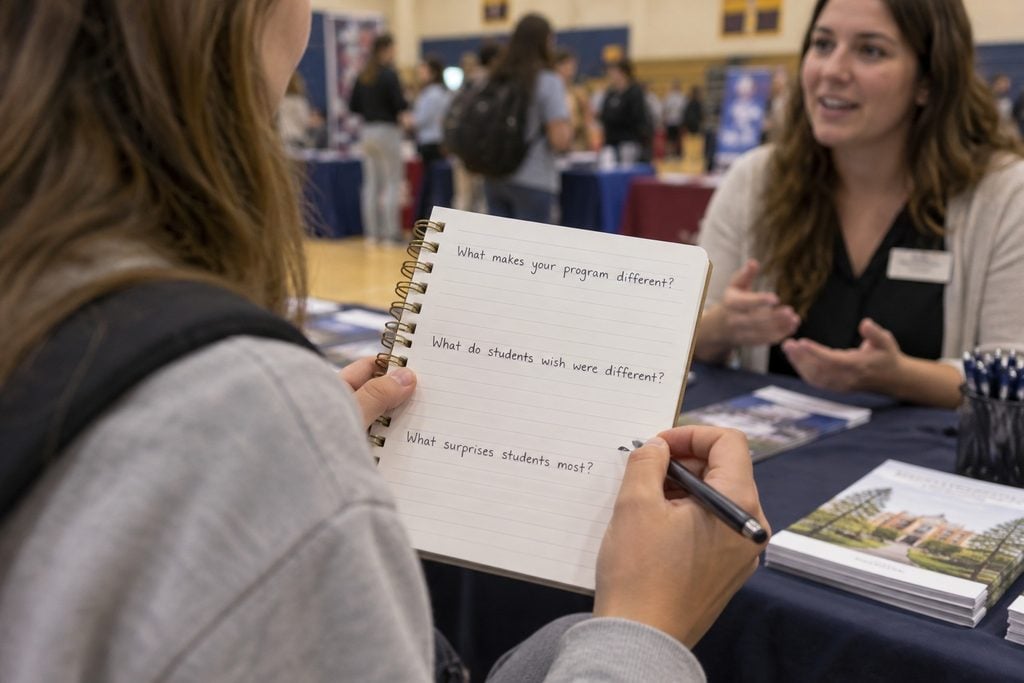
The questions worth asking at a fair are the ones that don’t have a webpage answer:
- “What makes your engineering program different from [another school on the list]?”
- “What’s something students here complain about?”
- “What’s a class most students don’t expect to love, but do?”
These get you something real: an unscripted answer from an actual person who works there. That’s the whole value of the format, and it’s wasted the moment the conversation turns into fact-checking.
Do Your Homework Before You Go
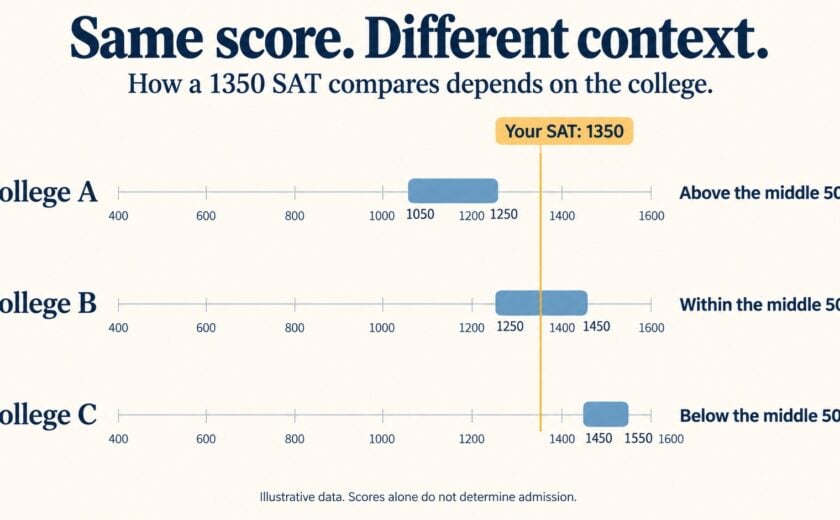
Test-optional status, acceptance rate, GPA and test score ranges — all of that lives in a school’s Common Data Set, and none of it requires a conversation to find. Look it up before you go, not at the booth. That way, the ten minutes your student gets with a rep goes toward something a search engine can’t give them.
What to Do With the Answers
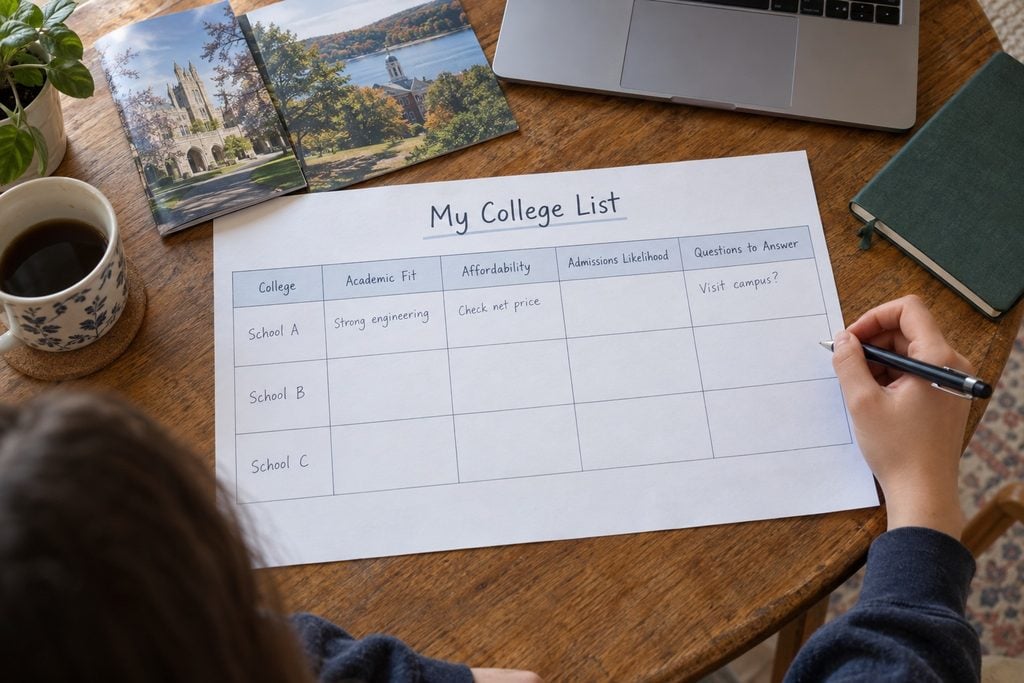
A great conversation at a fair should shape whether a school makes it onto the list at all — not just confirm numbers you already had. If your student walks away excited about a school they’d never heard of, that’s the fair doing its job. If they walk away more confident about a school already on the list, that’s useful too. Either way, the conversation is a data point, not a verdict, and it still has to get checked against the numbers.
Let’s Map Out the Plan
Building a college list that actually reflects your student’s numbers, not just the schools that made the best pitch, is exactly what we help families do. In a free consultation, we’ll look at where your student stands and how the schools on their radar compare. Schedule your free consultation here.
A note on timing: Many DFW districts hold their fall college fairs in October — check your student’s district college and career readiness page for the current schedule.